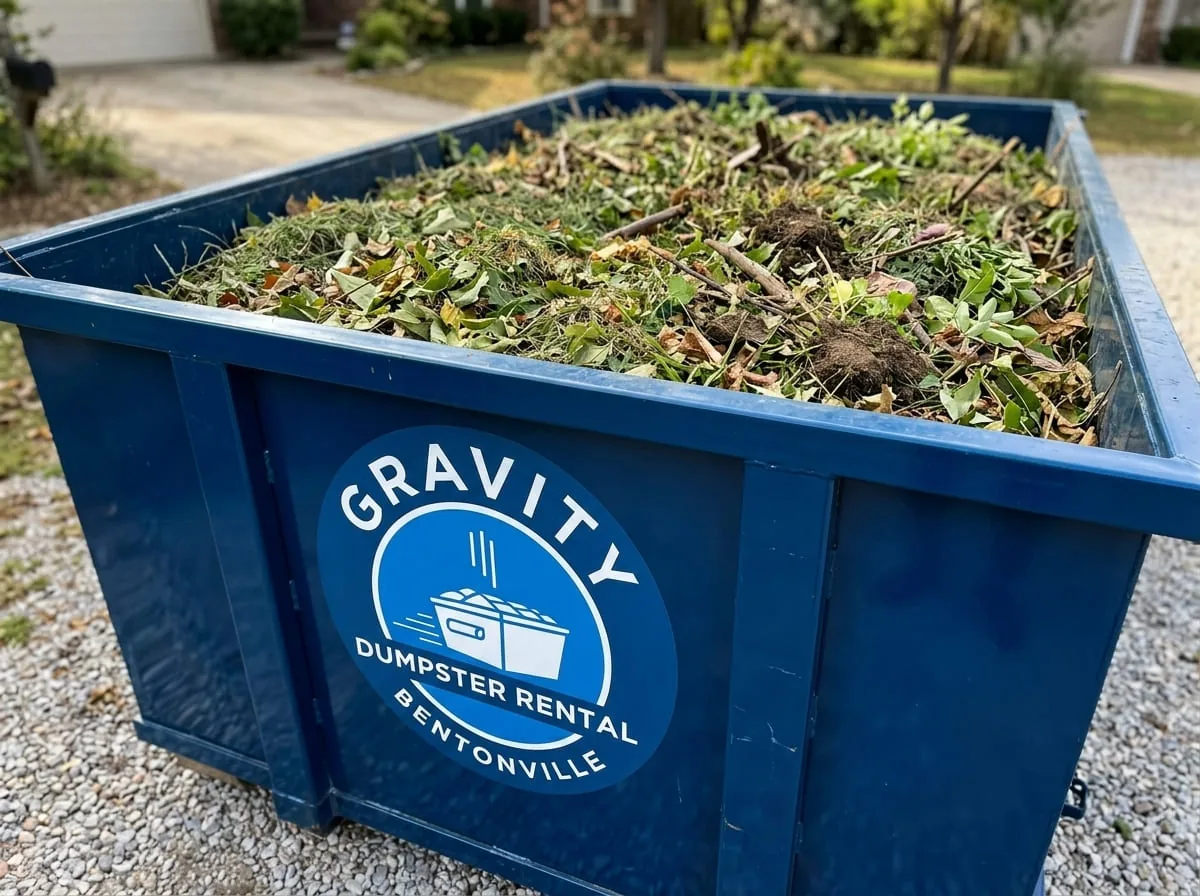
Ask most homeowners what fills a dumpster fastest and they picture a demolition project or a stack of shingles. In practice, a pile of brush and leaves fills a container just as fast – sometimes faster – without ever coming close to the tonnage limit. Yard waste is bulky, loose, and full of air pockets, so the number that matters most usually is not the weight allowance printed on the rental agreement. It is whether the box is physically big enough to hold everything you are cutting down or raking up.
That distinction shapes almost every decision in this guide, whether you are clearing leaves and old shrubs on a Saturday, taking down a dead tree, or clearing a wooded lot ahead of a new build. We will cover how to size a container for each kind of job, what belongs in it, and when a compost pile or mulching mower is the smarter move instead of a rental at all.
Yard Waste Is a Volume Problem, Not a Weight Problem
Every dumpster size we rent comes with a weight allowance included in the flat rate – a 10 yard dumpster covers 1 to 2 tons, a 20 yard covers 2 to 3 tons, and a 30 yard covers 3 to 4 tons. Those numbers matter enormously for concrete, roofing, or renovation debris. Broken concrete and brick run 3,000 to 4,000 pounds per cubic yard, so a 10 yard box can hit its full tonnage allowance with only a few inches of material across the floor.
Leaves, brush, prunings, and small limbs behave nothing like that. They are light and full of empty space, closer in principle to the low-density end of mixed debris (roughly 200 to 400 pounds per cubic yard) than to anything masonry-related, and often lighter still once you account for how loosely brush stacks. That means you will typically run out of room in the box long before you approach the weight cap. The practical result: size a yard-waste dumpster for volume first, and treat the tonnage allowance as a comfortable cushion rather than the limiting factor.
There is one exception worth flagging. Stumps and root balls dragged out with a chunk of attached soil get heavy fast – dry soil runs around 2,000 pounds per cubic yard on its own, and more when it is wet, which is common in NWA's clay ground. A handful of muddy root balls can add real tonnage even while the box still looks half-empty. If a job involves pulling stumps or grading afterward, mention that when you call so we can size the container correctly.
Clearing a Wooded Lot Before You Build
Northwest Arkansas is in the middle of a sustained building boom, and a large share of new lots around Bentonville, Centerton, and Bella Vista start out wooded. Clearing that growth – brush, saplings, mid-size trees, and the stumps and root systems left behind – generates a genuinely large volume of green debris before a foundation ever goes in, and it is a different job than raking a suburban yard.
For a partial clearing on a residential lot, a 30 yard container is a common starting point; for a fuller wooded-lot clearing ahead of a build, a 40 yard is often the more efficient choice, since fewer swaps mean less downtime for the crew. Our construction dumpster rental service handles this kind of pre-build cleanup regularly, and if the clearing is the first phase of a larger build, our new construction dumpster guide for NWA walks through what typically follows – grading, footings, framing debris, and so on. Placement matters here too: a cleared lot with no driveway yet means figuring out a stable, accessible spot for delivery, which is worth discussing with our team before the truck shows up.
Storm-Downed Limbs and Emergency Cleanup
Ice storms and spring wind events are a regular part of the calendar in this part of Arkansas, and downed limbs are one of the most common calls we get afterward. Storm cleanup carries its own urgency and its own mix of debris – sometimes limbs and brush alone, sometimes limbs tangled with fence sections or a damaged shed. Rather than duplicate that guidance here, see our dedicated storm debris cleanup guide for NWA for sizing and timing advice specific to storm response. The volume-over-weight logic in this article still applies – a yard full of downed limbs fills a box fast without threatening the tonnage limit.
Routine Yard Cleanup: Leaves, Brush, and Old Shrubs
Most calls we get about yard waste are not dramatic. They are a homeowner tackling a backlog: overgrown shrubs that have outgrown the bed, a dead or dying tree finally coming down, several seasons of leaf buildup along a fence line, or a general reset before selling a house or planting something new. This is where the yard waste removal service earns its keep – one container, dropped in the driveway, that takes brush piles, leaf bags, small branches, and old landscaping material without a trip to the transfer station.
For this kind of project, a 10 or 15 yard container usually covers a weekend's worth of cleanup on a typical residential lot in Bentonville or the surrounding towns. If the job includes taking down one or two larger trees, or the cleanup has been deferred for a while and the pile is bigger than expected, stepping up to a 20 yard gives more breathing room without paying for capacity you will not use.
What Grows Here: Pine, Oak, and Ozark Brush
The vegetation you are cutting affects how a pile behaves in a container. Northwest Arkansas sits in the Ozark region, and yards and undeveloped lots here commonly mix hardwoods like oak with pine and a dense understory of native brush and saplings. Oak limbs and trunk sections are dense and heavy for their size compared with pine, which tends to be lighter and bulkier, and either species mixed with green brush and leaf litter will pack down differently than a pile of uniform material. As a general rule, denser hardwood sections are worth cutting to manageable lengths so they load efficiently, while lighter brush and pine limbs are more about having enough cubic footage to hold the volume. If your property has a specific mix of vegetation you are not sure how to plan for, mention it when you call and we can talk through container size.
Matching the Container to the Job
The table below gives a general starting point based on the scope of the job, using the same container dimensions across every size we rent.
See the full dumpster size guide for driveway space and overhead clearance needed for each container – that clearance runs 23 to 25 feet across every size we offer, which matters if you are staging a container under mature tree cover. When in doubt between two sizes, sizing up by one tier usually costs less than a second haul.
Composting and Mulching for Smaller Loads
Not every cleanup needs a dumpster. If you are dealing with a modest pile of leaves, grass clippings, and soft plant material, composting on-site is a genuinely useful option that keeps organic matter out of a container entirely and turns it into usable material for beds and gardens. The EPA's guide to composting at home covers the basics of building and maintaining a pile. A mulching mower or chipper can also work through leaves and small brush on the spot rather than hauling them away.
The tradeoff is scale. Composting and mulching handle a season's worth of leaves or a few pruned branches well; they are not a realistic answer for a downed tree, a lot-clearing project, or brush volume measured in truckloads rather than wheelbarrows. Past a certain point, a container is simply faster and less labor-intensive than managing a large pile by hand.
What Can (and Can't) Go in With Your Yard Waste
Plant material, brush, limbs, leaves, grass clippings, and small stumps are all fine in a yard waste container. What causes problems is what gets mixed in alongside it: treated or painted lumber, construction scraps, chemically treated railroad ties, or household trash tossed on top of a brush pile. Keeping loads separated by type also matters for where the material ultimately goes – clean green waste can often be processed differently than mixed debris. Our general breakdown of what can and cannot go in a dumpster in Arkansas covers the full list of restricted items across every project type, and disposal of solid waste statewide falls under the Arkansas Division of Environmental Quality. If a job involves anything you are unsure about – treated wood mixed into a brush pile, for example – call ahead and we will tell you how to handle it.
Placement, Permits, and Getting Ready for Delivery
Most residential yard cleanup does not require a permit, since the container typically sits on your own driveway rather than a public street. Lot-clearing jobs on new-construction sites are more likely to involve a permit depending on the city and where the container needs to sit, and requirements vary by jurisdiction across Bentonville, Centerton, Rogers, and the rest of NWA. Our city-by-city permit guide breaks down what each municipality requires. If your cleanup involves digging, grading, or pulling stumps, call Arkansas 811 before you start so buried utility lines get marked first.
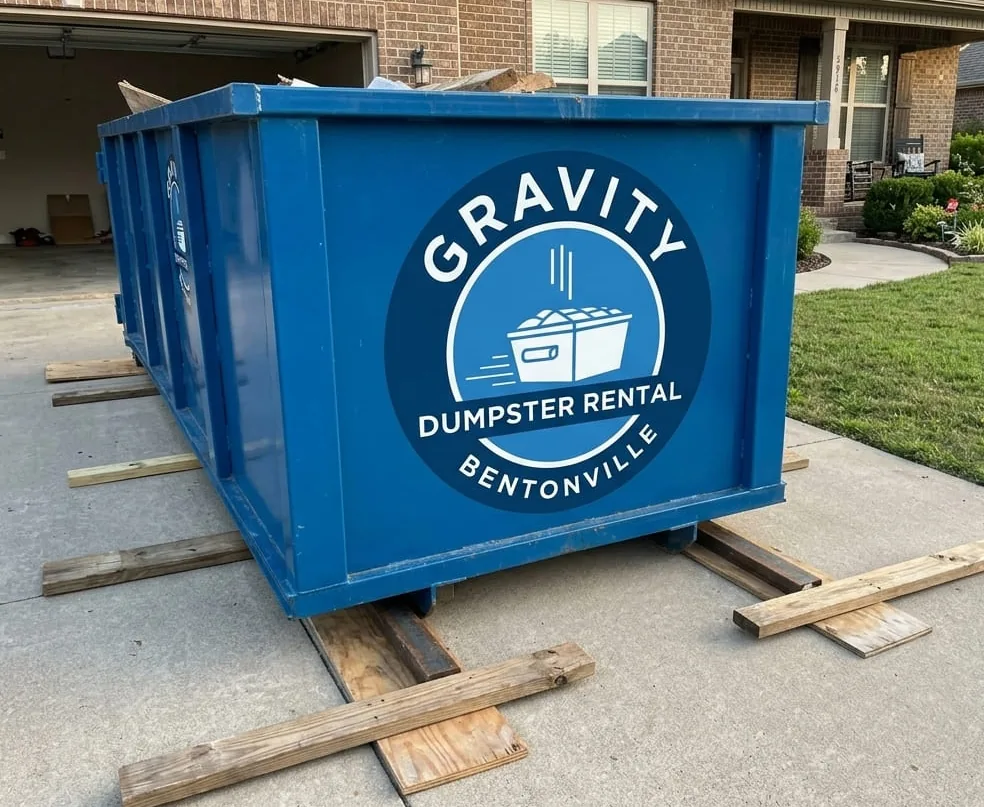
For placement, give us a clear, level spot with the driveway clearance noted in the table above, and let us know ahead of time if the property in Centerton, Bella Vista, or elsewhere in Bentonville and the surrounding area is still unpaved or under construction, since that changes where a container can safely sit.
Get Your Yard or Lot Cleared
Whether it is a weekend of raking, a dead tree finally coming down, or a wooded lot that needs to be cleared before a build starts, we size the container to the job rather than a one-size-fits-all guess. Same-day and next-day delivery is available across Benton and Washington counties, with a flat rate that covers delivery, pickup, and disposal up to the tonnage listed for your size. Contact us or call (479) 364-6780 and tell us what you are clearing – we will recommend the right size the first time.