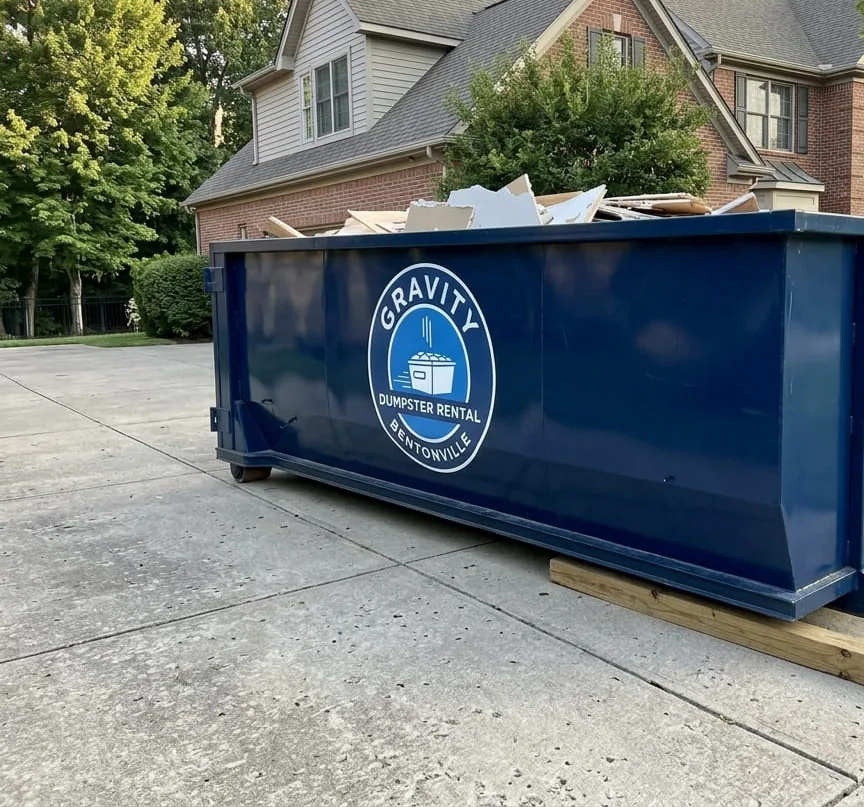
A hard spring storm can drop a hackberry across the fence line, strip half a roof of shingles, and leave a driveway buried under branches in under an hour. An ice storm works slower but does just as much damage, snapping limbs under the weight of a quarter inch of ice that built up overnight. Either way, the cleanup that follows is its own project, separate from the routine yard work most homeowners already plan for. This guide walks through how to sort what came down, document it before it leaves the property, and size a container that actually matches the job.
Northwest Arkansas Sits on the Active Edge of Storm Season
Benton and Washington County homeowners deal with three distinct storm risks in a typical year, and they are not equally likely at the same time of year. Spring is the region's most active severe weather stretch, with Arkansas sitting on the eastern edge of what forecasters have long called Tornado Alley. Damaging straight-line wind and large hail are the more common outcomes of any given severe thunderstorm cell, with a tornado being the least frequent but most destructive possibility. The National Weather Service's tornado safety resources cover what to do during an active warning, and the NOAA Storm Prediction Center tracks the day-to-day severe weather outlook that local forecasters draw from during the March-through-May peak.
Winter brings a different threat. NWA rarely gets buried in heavy snow the way the upper Midwest does, but ice storms are a real and recurring regional risk, and freezing rain does more structural damage per event than snow typically does. A layer of ice adds significant weight to tree limbs, power lines, and roof overhangs, and it is often the ice storms, not the snow events, that generate the most cleanup calls in a given winter. Knowing which risk is in play changes what kind of debris shows up in the yard afterward, from scattered brush after a wind event to split hardwood limbs after an ice load.
Green Waste or Storm Debris? They Are Not the Same Job
Routine yard cleanup, grass clippings, hedge trimmings, a few bags of leaves, is a different scope than what a storm leaves behind. Our yard waste removal service is built for that ongoing, predictable volume. Storm debris is a different animal: it arrives all at once, it is often tangled with fencing or damaged structures, and it can include material that has nothing to do with landscaping, torn shingles, broken siding panels, splintered fascia board. Our storm debris removal service is set up specifically for that mixed, urgent, whole-property load. If your cleanup is limited to trimmed brush and downed small limbs with nothing structural involved, a standard yard waste container may be all you need. If the storm touched the house, a fence, or a shed in addition to the trees, plan for the broader storm debris category instead.
Downed Limbs and Trees: What Actually Fills the Container
Branches and brush are bulky but light, so volume fills up fast even though the tonnage allowance included with your rental barely moves. The math changes the moment a whole tree, or a root ball, enters the picture. Wet wood is heavier than seasoned wood, and a root ball dragged up with a fallen tree carries a surprising amount of embedded soil and rock along with it. Cutting large sections down to lengths that lie flat, rather than tossing whole branches in at odd angles, makes a real difference in how much a single container actually holds. For a single large tree down plus the surrounding limb debris, a 20-yard container is a reasonable starting point; for a yard with several trees down after a wind event, sizing up to a 30-yard makes more sense than ordering two separate 20s.
Roof and Siding Damage After Hail or Wind
Hail large enough to crack shingles or dent siding and gutters is one of the more common forms of storm damage in this region, and it often triggers a full or partial roof replacement rather than a spot repair. Asphalt shingle weight varies a lot by type, standard three-tab shingles run roughly 230 to 250 pounds per square (a square is 100 square feet of roof), while architectural or laminated shingles run heavier, roughly 350 to 430 pounds per square. That difference matters when sizing a container: a full architectural tear-off on an average roof adds up quickly, and our roofing dumpster rental guidance covers sizing for a tear-off in more detail. Siding and gutter debris is comparatively lighter by volume but still needs to be separated from tree limbs when possible, since roofing and siding material is dense and will use up a container's weight allowance long before it looks even close to full.
Photograph Before You Haul
Once debris leaves the property, it is gone, and so is the easiest evidence of what the storm actually did. Before anything gets loaded into a container, walk the property and photograph the damage as it sits, the tree across the fence, the section of missing shingles, the dented siding, the cracked window. A simple written inventory alongside the photos, room by room or area by area, gives you and your insurance adjuster something concrete to work from later. This is practical advice, not legal or insurance guidance, and coverage details, deductibles, and claim requirements vary by policy and by carrier, so check directly with your insurer or adjuster before you finalize a claim or dispose of anything you are unsure about. Once documentation is done and you have been cleared to move forward, disposal can proceed without the pressure of trying to reconstruct what was where after the fact.
Fences, Sheds, and Other Outbuilding Damage
A falling limb or a straight-line wind gust does not stop at the tree line. Fence panels, gates, detached sheds, and carports take real damage in the same storms that bring down trees, and the resulting debris is a mix of wood, metal fencing, hardware, and sometimes small amounts of concrete from footings or post bases. That combination is well suited to the same storm debris container as the tree work, rather than a separate trip, and our demolition debris removal service covers larger structural teardown if an outbuilding needs to come down entirely rather than just be repaired. Smaller leftover items, broken patio furniture, a damaged grill, storm-tossed yard decor, fall more into junk removal territory than demolition, so it is worth sorting those out separately if the load is getting close to a weight limit. Disposal of debris in Arkansas, storm-related or otherwise, falls under the state's solid waste management regulations, which is one more reason to work with a hauler that handles disposal properly rather than an informal cleanup arrangement.
Matching Container Size to Storm Debris
The right size depends on what kind of debris dominates the load, brush and limbs behave very differently from shingles or fencing material once weight is factored in. The table below is a general starting point; a quick call still gets you a more precise recommendation for your specific property.
Our full dumpster size guide covers dimensions and driveway clearance for each option in more detail, which matters when a downed tree or debris pile has narrowed the usual delivery path.
After a Regional Storm, Expect Everyone Else to Need a Dumpster Too
A storm severe enough to bring down trees across one property usually did the same thing three streets over, and across most of Bentonville, Rogers, or Springdale at the same time. That is the practical reality homeowners often do not plan for: a regional event creates a regional spike in demand, and every hauler in Northwest Arkansas gets a wave of calls within the same day or two. Booking early, even before you have finished assessing the full extent of the damage, holds your place in line rather than leaving you waiting behind everyone else who had the same idea. Our same-day dumpster rental option exists for exactly this kind of urgency, and genuinely time-sensitive situations, a tree blocking a driveway or damage that is exposing a home's interior to weather, get priority scheduling ahead of routine renovation work.
Homeowner Cleanup Versus Contractor Repair Debris
A homeowner clearing storm damage on their own property is usually dealing with a single load event: get the tree off the fence, clear the limbs, bag up the loose material, done. A contractor brought in to repair storm damage is often generating debris in phases, tear-off first, then framing repair, then a second wave once siding or roofing material arrives and the old material comes off. That difference affects both container size and rental duration. A homeowner typically wants one container sized generously enough to cover the whole cleanup in a single fill, while a contractor doing a multi-day or multi-phase repair may want a container that stays on site longer, or a swap-out scheduled once the tear-off phase is finished. Our residential dumpster rental and construction dumpster rental pages both cover the practical differences in more detail, and either way, sorting debris by type as it comes down, rather than mixing everything together, makes the whole process faster regardless of who is doing the work.
Getting a Dumpster on Site Fast
Storm cleanup does not wait for a convenient week, and neither should the container that makes it possible. Whether the job is a single downed tree in Bentonville, hail damage across a roof in Rogers, or a mixed cleanup after a wind event in Springdale, the same basic approach applies: document the damage first, sort debris by type, and size the container for the heaviest material in the load rather than the bulkiest. For routine seasonal brush and trimming beyond an actual storm event, our guide to yard waste and brush disposal in NWA covers that separately. When it is time to get a container scheduled, contact us or call (479) 364-6780 directly. Urgent, storm-related requests are prioritized ahead of standard scheduling, so do not hesitate to call the same day damage happens rather than waiting until the cleanup list feels manageable.