Home Renovation Debris Guide for Bentonville Homeowners
Kitchens, bathrooms, flooring, and whole-house remodels each load a dumpster differently. Here is how to size a container by room and material for a Bentonville-area renovation.
ReadPlacement & Prep guide
Where a dumpster lands determines whether your driveway looks the same when it's picked up. Here's how to protect asphalt, concrete, gravel, and yard surfaces, plan for clearance, and check what's underground before delivery day.
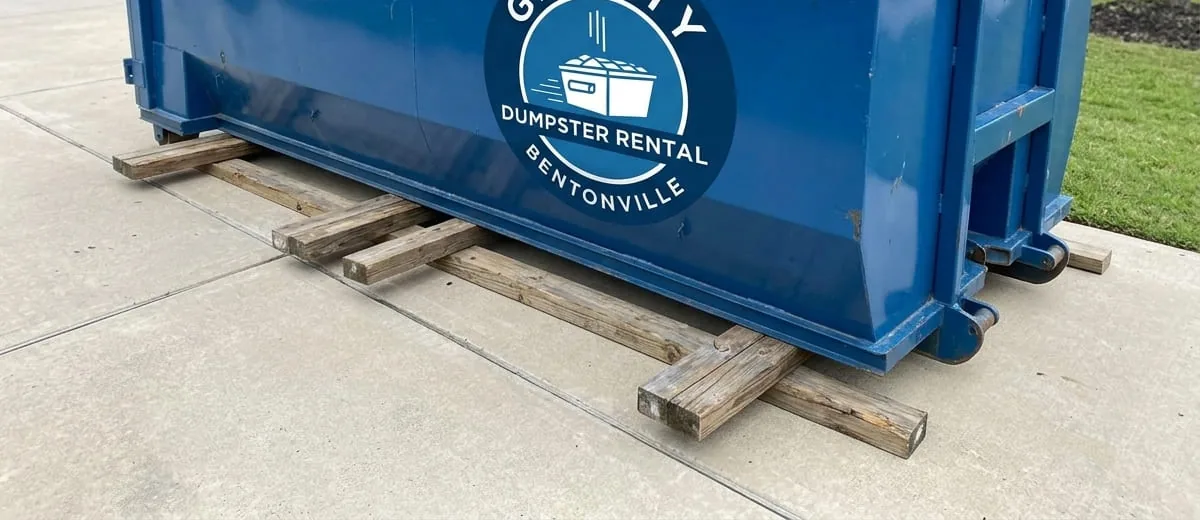
A roll-off dumpster looks simple to place: back the truck up, tilt the frame, slide the box off. But where it lands determines whether your driveway looks the same after pickup as it did before delivery, and whether the crew can even get to it without a detour through soft ground or under a low limb. In Northwest Arkansas, where a huge share of rentals go onto brand-new gravel pads, freshly poured concrete, or a stretch of lawn because the driveway is still being framed, a few minutes of planning before the truck shows up saves a lot of grief afterward.
This guide covers surface-by-surface placement, why boards under the rails matter, how much clearance a box needs overhead and on the ground, and what to check before delivery day.
A loaded roll-off doesn't rest on its whole underside. The weight sits on two narrow steel rails running the length of the container, so every pound of debris inside is transmitted through a strip only a few inches wide. On soft asphalt, especially in summer heat, that concentrated load can dent or gouge the surface in a matter of hours. On concrete, it's less about denting and more about chipping edges or hairline-cracking a thin or aging slab. On gravel or dirt, the rails simply sink.
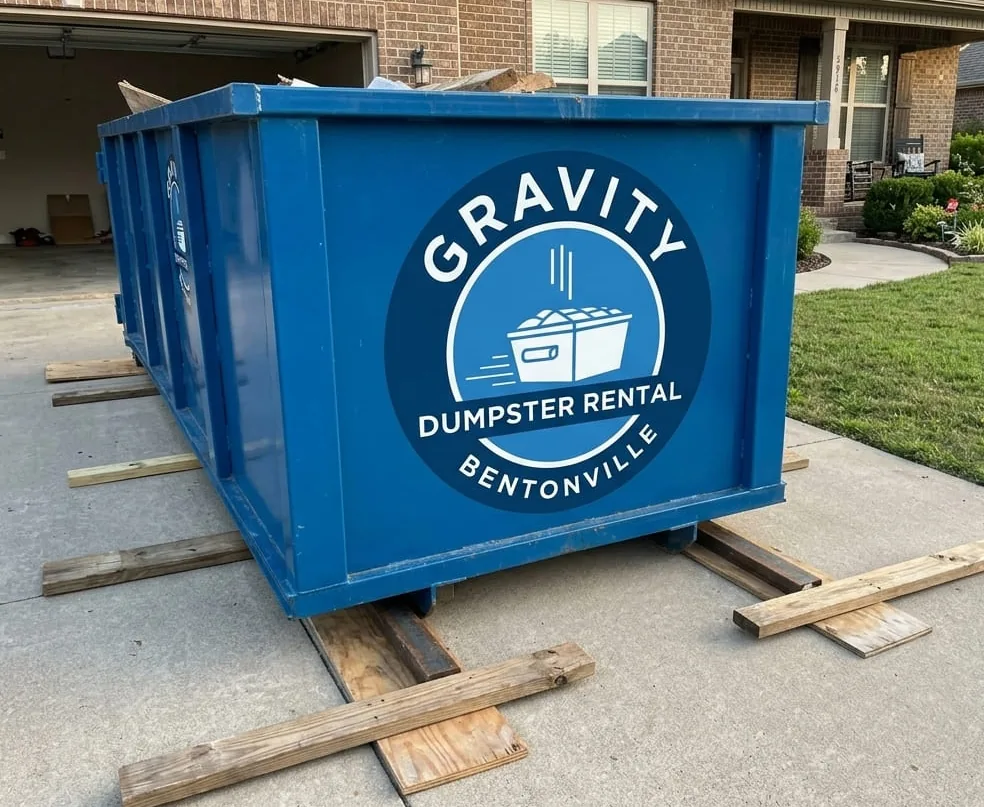
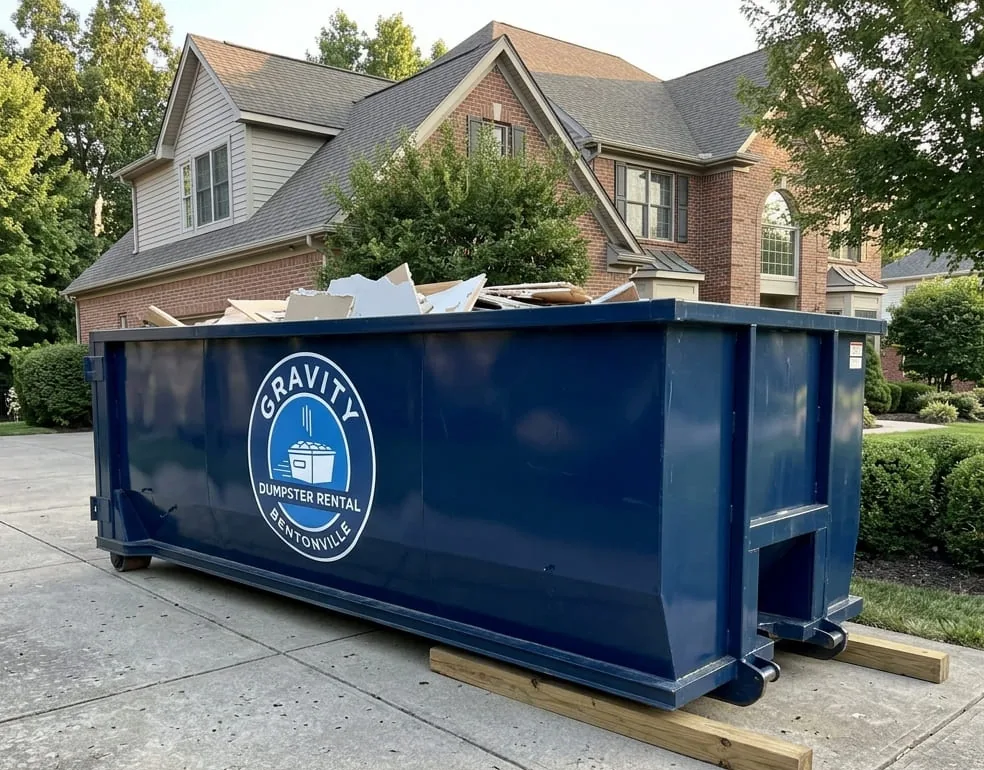
The fix is the same across every surface: put something rigid and wide under the rails before the box comes off the truck. Two-by lumber, plywood sheets, or purpose-built dumpster boards spread that line load across a much larger footprint so no single point of the driveway is taking the full weight. Most drivers carry boards and will use them if you ask when you book, and it's worth confirming this up front rather than assuming it's automatic, especially for a construction dumpster rental that will sit loaded for several days.
Asphalt is forgiving in cool weather and much less forgiving once it has been baking in a July or August sun. Softened asphalt under a loaded box, especially a 20 or 30 yard unit carrying broken concrete or roofing tear-off, is where you'll see rail marks and shallow depressions. If you have any choice in timing, a morning delivery beats an afternoon one on a hot week, and boards under the rails are the single best insurance you can put down. Avoid dragging the container once it's off the truck; ask the driver to position it correctly the first time, since asphalt scuffs and tears more easily than it looks.
Concrete driveways handle the weight of a loaded roll-off better than asphalt does, but they aren't immune to damage. Slab edges, control joints, and older or thinner concrete are the vulnerable points — a rail set right on a joint or a corner can chip it. Stamped or decorative concrete is worth extra caution since a scuffed or cracked surface there is far more expensive to fix cosmetically than a plain slab. Boards under the rails still apply here, and it's reasonable to ask the driver to set the box a foot or two off a decorative edge or a fresh expansion joint if your driveway has one.
A huge share of dumpster rentals around Bentonville, Centerton, and Bella Vista land on a gravel driveway or a bare dirt-and-gravel construction pad, simply because that's what a new-build lot has at the point a dumpster is needed. Gravel isn't a bad surface for this — it drains and it's already compacted in most cases — but loose or freshly spread gravel can still let the rails dig in unevenly, tilting the box slightly and making it harder to load. Ask for the flattest, most compacted section of the pad rather than a low spot or freshly graded fill, and expect the driver to use boards or blocking to keep the container level.
New-construction sites carry an extra wrinkle: the "driveway" on delivery day might just be exposed subgrade that hasn't seen a truckload of gravel yet. If rain is in the forecast before or after drop-off, that same surface can turn soft enough to rut under delivery-truck traffic, not just under the container itself. Builders scheduling a construction dumpster for a framing or debris-hauling phase should plan the container's spot around drainage, keeping it off any area doing double duty as a runoff path — the same erosion-control thinking behind the EPA's guidance on construction site stormwater. Our new-construction dumpster guide covers scheduling around pour dates and framing phases in more detail.
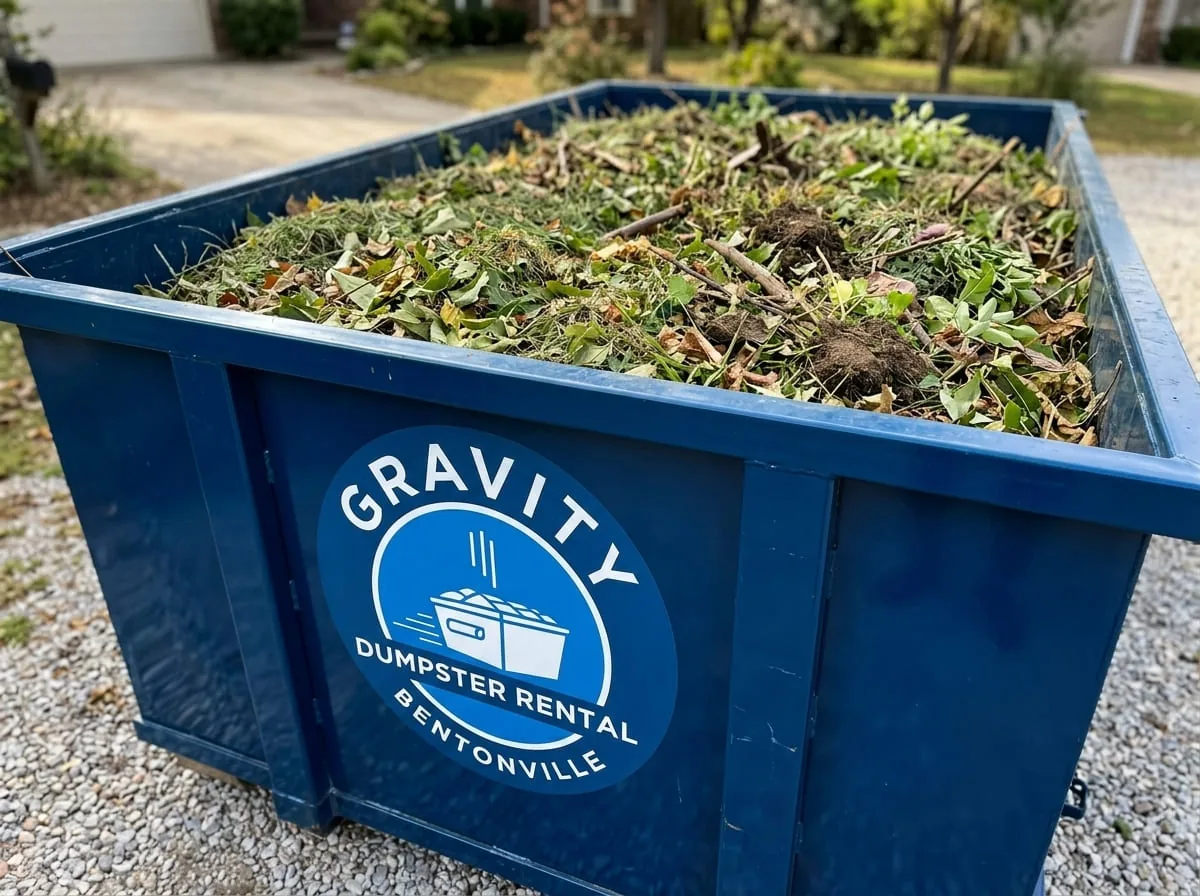
Sometimes there's no driveway option at all, or the driveway is blocked by parked trailers, framing material, or equipment, and the only open space is a stretch of yard. It works, but it's the surface that needs the most protection. Northwest Arkansas sits in the Ozark region, where clay-heavy soil is common — the kind that holds water, drains slowly, and gets soft and rut-prone once it's saturated. A loaded container's rails can sink noticeably into wet clay in a way they never would on gravel or pavement, and the ruts left behind don't self-heal the way a lawn recovers from foot traffic.
If yard placement is the only option, boards or plywood under the rails aren't optional, they're the whole plan. Pick the driest, flattest section available, avoid any area you know holds water after a storm, and steer well clear of a septic drain field if your property has one — the soil there is engineered to be permeable and isn't built to carry concentrated weight. For a residential dumpster rental where yard placement is the likely outcome, mentioning that when you book lets the driver bring the right protection instead of guessing on arrival.
Here's the short version of everything above, side by side:
| Surface Type | Placement Considerations |
|---|---|
| Asphalt driveway | Boards required under rails; softens in summer heat, so avoid peak-heat delivery timing when possible |
| Concrete driveway or pad | Handles weight well but rail feet can chip edges, joints, or stamped/decorative finishes; boards still recommended |
| Gravel driveway | Choose the flattest, most compacted section; loose gravel can let a box sit unevenly without blocking |
| New-construction dirt/gravel pad | Surface may be exposed subgrade; can turn soft after rain, affecting both the container and delivery-truck access |
| Lawn or unpaved ground | Highest risk of rutting, especially in wet Ozark clay soil; boards essential, avoid septic drain fields and low, wet spots |
Before the truck shows up, measure the actual space, not just what looks open. A roll-off needs a straight, clear run to back into and enough length to sit fully off the street or garage door path. Every size in our lineup is roughly 8 feet wide, so the length of clear run and the overhead clearance for the delivery truck's tilt frame are what actually change from size to size.
| Size | Driveway Space Needed | Overhead Clearance |
|---|---|---|
| 10 yard | ~22 ft clear run | 23-25 ft |
| 15 yard | ~26 ft clear run | 23-25 ft |
| 20 yard | ~34 ft clear run | 23-25 ft |
| 30 yard | ~34 ft clear run | 23-25 ft |
| 40 yard | ~36 ft clear run | 23-25 ft |
That 23-25 foot overhead figure is for the truck raising and lowering the box on its tilt frame, not just clearing a stationary container, so it applies at the driveway entrance and along the path in as well as at the final resting spot. Mature trees are common throughout older NWA neighborhoods and the wooded lots near the region's trail systems, and a low limb that looks fine for a parked car can still catch a tilted frame on the way in. Walk the path from the street to the drop spot and look up, not just across, before delivery day. If you're unsure which size fits your job and your driveway both, our full dumpster size guide and the size comparison article break down capacity against footprint in more detail.
A loaded container is heavy enough to matter to anything running underneath the spot where it sits, and in a region growing as fast as Benton and Washington County, it's common not to know exactly what's buried in a yard that was farmland or forest a few years ago. Before you set a delivery spot near a septic tank, leach field, well casing, or any area you haven't dug in before, call 811. Arkansas 811 is the state's free utility-locating service — dial 811 or submit a request online, and member utility companies will mark public lines at the site, typically within a couple of business days.
One thing worth understanding going in: 811 locates utility company lines, not private ones. Septic tanks, leach fields, well casings, invisible pet fencing, and irrigation lines on your own property generally aren't part of that locate, so if you suspect any of those run near your planned drop spot, treat that as the deciding factor rather than assuming a clear 811 ticket means the whole area is safe to load weight onto. This is especially relevant on newer NWA properties where a septic system was installed during construction and the yard hasn't fully settled or been re-landscaped yet.
Plans change between the day you book and the day the truck arrives. A car that wasn't supposed to be there is parked across the driveway, a delivery of lumber is stacked where the container was going to sit, or a week of rain has turned a new-construction pad into mud a truck shouldn't drive across. When that happens, call as soon as you know rather than waiting for the driver to discover it on site — a quick heads-up usually means a same-day fix, while a driver turned away cold means a rescheduled trip.
A few common fallbacks: shifting the box to a different hard surface on the property, placing it briefly at the curb or in the street where local rules allow (check our city-by-city permit guide before assuming this is an option, since requirements vary by municipality), or simply rescheduling delivery by a day if a construction pad needs time to dry out. None of these are last resorts to be embarrassed about — they're normal parts of coordinating delivery around an active job site, and a local crew working across Bentonville, Centerton, and the rest of the region every week has usually seen the exact obstacle before.
The best outcome is avoiding the scramble altogether: measure your access path, decide on asphalt, concrete, gravel, or lawn ahead of time, and mention any tight spots, low limbs, or known utility concerns when you book. If you're not sure your driveway or yard can handle the size you need, or want a second opinion on where a container should sit on a new-construction lot, call (479) 364-6780 and talk it through with someone who has placed containers on driveways, gravel pads, and yards across Northwest Arkansas for eleven years. We can also walk you through scheduling delivery around a specific access issue rather than guessing on drop-off day.
Talk to a real person
Call (479) 364-6780 and describe the job. Flat price, stated tonnage allowance, and a delivery window on the same call.
Mon–Sat 7:00am – 6:00pm · Sun by appointment
From this guide
<p>Most delivery drivers carry boards or blocking and will use them under the rails when they set the container, but it's worth confirming when you book rather than assuming. If you have your own plywood or 2x lumber and a surface you're especially protective of, like stamped concrete or a newer asphalt driveway, you can ask the driver to use it or supplement what they bring.</p>
<p>Yes, and it's common on new-construction lots where the driveway isn't finished yet. Grass and dirt need the most protection of any surface, since a loaded container's rails can sink and rut the ground, especially in the clay-heavy soil common across Northwest Arkansas when it's wet. Boards under the rails and choosing the driest, flattest spot available make the biggest difference.</p>
<p>Plan on 23 to 25 feet of overhead clearance across all our container sizes, since that's for the truck's tilt frame raising and lowering the box, not just the parked container. Check the full path from the street to the drop spot for low tree limbs or power lines, not just the final resting spot.</p>
<p>It's a smart step any time the drop spot is near a septic system, well, or an area you haven't dug in before, since a loaded container's weight can matter to anything running shallow underground. Arkansas 811 marks public utility lines for free, though private lines like septic tanks, leach fields, and well casings on your own property generally aren't part of that locate, so use your own knowledge of the property as well.</p>
<p>Call as soon as you know there's a problem rather than waiting for the driver to find it on arrival. Common fixes include shifting the container to another hard surface on the property, placing it at the curb where local rules allow, or rescheduling by a day if a construction pad needs to dry out.</p>
Keep reading
Kitchens, bathrooms, flooring, and whole-house remodels each load a dumpster differently. Here is how to size a container by room and material for a Bentonville-area renovation.
ReadLeaves, brush, and cleared trees fill a container fast without ever coming close to the weight limit. Here is how to size a dumpster for real NWA yard cleanup and lot-clearing jobs.
ReadWhat actually sets a Bentonville dumpster rental price: container size, debris weight, rental length, distance from the yard, and how to spot hidden add-on fees before you book a container.
Read